How Much Sleep Do Puppies Need: A Complete Guide to Puppy Sleep Requirements
Introduction
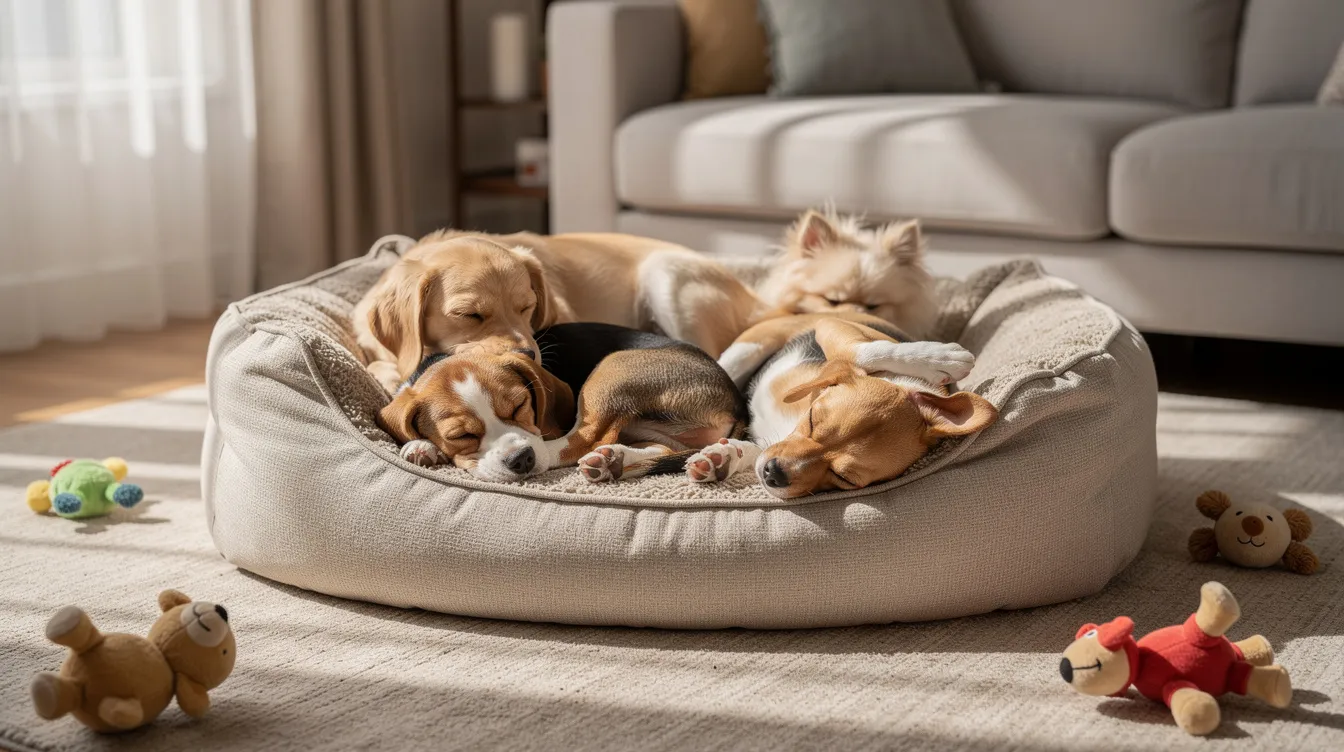
Puppies need 18 to 20 hours of sleep per day during their earliest weeks of life, making sleep the single most important activity in your pup’s daily routine. If that number surprises you, consider that newborn puppies sleep approximately 18 to 22 hours per day-roughly 90% of the day-and even after coming home at 8 weeks, most puppies are awake for only 4 to 6 hours daily.
This guide covers puppy sleep requirements from 8 weeks through 6 months of age, detailing how much sleep your puppy needs at each developmental stage and how to build a puppy sleep schedule that supports healthy growth, brain development, and training success. It does not cover medical sleep disorders, which require veterinary diagnosis. Whether you’re a first-time pet parent in Northern Virginia or an experienced dog owner adjusting to a new addition, understanding your puppy’s sleep needs will directly influence how quickly your pup learns, how well they behave, and how smoothly your household runs.
Age is the primary factor dictating puppy sleep needs. Sleep supports physical growth and development in puppies, aids in brain development and memory processing, and plays a direct role in behavioral regulation. Sleep deprivation can lead to behavioral problems in puppies-including reactivity, poor focus, and difficulty settling-that many owners mistakenly attribute to temperament rather than tiredness.
Here’s what you’ll gain from this guide:
- Age-specific sleep requirements from 8 weeks through 6 months with exact hour ranges
- Sample daily schedules you can implement immediately based on your puppy’s age
- Sleep environment strategies that promote better rest and support crate training
- Solutions to common sleep challenges like nighttime crying and trouble settling
- Clear signals for when to consult a professional trainer or vet about sleep-related issues
Understanding Puppy Sleep Requirements
Healthy puppy sleep patterns look very different from what most people expect. Unlike adult dogs, who typically consolidate their rest into longer blocks, puppies cycle through short bursts of sleep and activity throughout the entire day. This polyphasic sleep pattern-multiple sleep-wake cycles per 24-hour period-is totally normal and mirrors what you’d see in human babies during early development.
From a professional training perspective, understanding these patterns is foundational. A puppy that isn’t getting enough sleep will struggle to focus during training sessions, show increased mouthing and nipping, and may develop reactive behaviors that become harder to correct over time. Sleep isn’t separate from training-it’s the platform everything else is built on.
The Science Behind Puppy Sleep
During the first several months of life, your puppy’s body is doing extraordinary work: building bones, developing muscles, forming neural connections, and maturing the immune system. All of this requires rest. Growth hormone secretion in dogs strongly correlates with deep slow-wave sleep, and research shows that recovery sleep following periods of wakefulness produces elevated growth hormone peaks-meaning that when your puppy finally crashes after an active period, their body is making the most of that downtime for physical development.
Sleep aids in brain development and memory processing for puppies in measurable ways. REM sleep-the phase where you’ll notice your pup twitching, paddling their legs, or making small sounds-plays a critical role in neural maturation and memory consolidation. Puppies spend proportionally more time in REM sleep compared to adult dogs, reflecting the enormous cognitive load they carry as they learn about the world. Studies demonstrate that after learning new tasks, changes in REM and non-REM sleep architecture correlate with how well the dog retains what was taught.
This has direct implications for training. Well-rested puppies learn commands faster and retain lessons better. If you’re working on puppy obedience training, scheduling practice sessions at the beginning of a wake window-when your puppy is alert and refreshed-will produce significantly better results than pushing through when they’re tired.
Sleep vs. Rest: Key Differences
Not all quiet time is created equal, and understanding the difference between active sleep, quiet rest, and wakeful periods helps you gauge whether your puppy is actually getting enough sleep.
Active sleep (REM) involves visible muscle twitches, rapid eye movements, and irregular breathing. This is when memory consolidation and neural development are most active. Deep sleep (non-REM/slow-wave) is when your puppy lies completely still with steady breathing-this is when growth hormone release peaks and tissue repair occurs. Quiet rest is a lighter state where your pup is drowsy or lightly dozing but not fully asleep; they’ll respond quickly to sounds or movement. While quiet rest reduces energy expenditure and provides some recovery, it doesn’t deliver the same restorative benefits as full sleep cycles.
Wakeful periods are when your puppy is fully alert-exploring, eating, playing, training. Puppies can become cranky or hyperactive when overtired, much like toddlers, and overlong wakefulness leads to an overtired state where the pup literally cannot settle. Many owners interpret this hyperactivity as needing more exercise when the opposite is true: their puppy needs a nap.
Understanding these distinctions helps you create age-appropriate schedules that prioritize genuine sleep, not just quiet time in a crate.
Age-Based Sleep Schedules and Requirements
Building on the science of why puppies need so much rest, here’s exactly how those needs translate into specific numbers at each developmental stage. As your puppy grows, sleep requirements shift-and so should your approach to training and daily structure.
8-12 Weeks: Maximum Sleep Phase
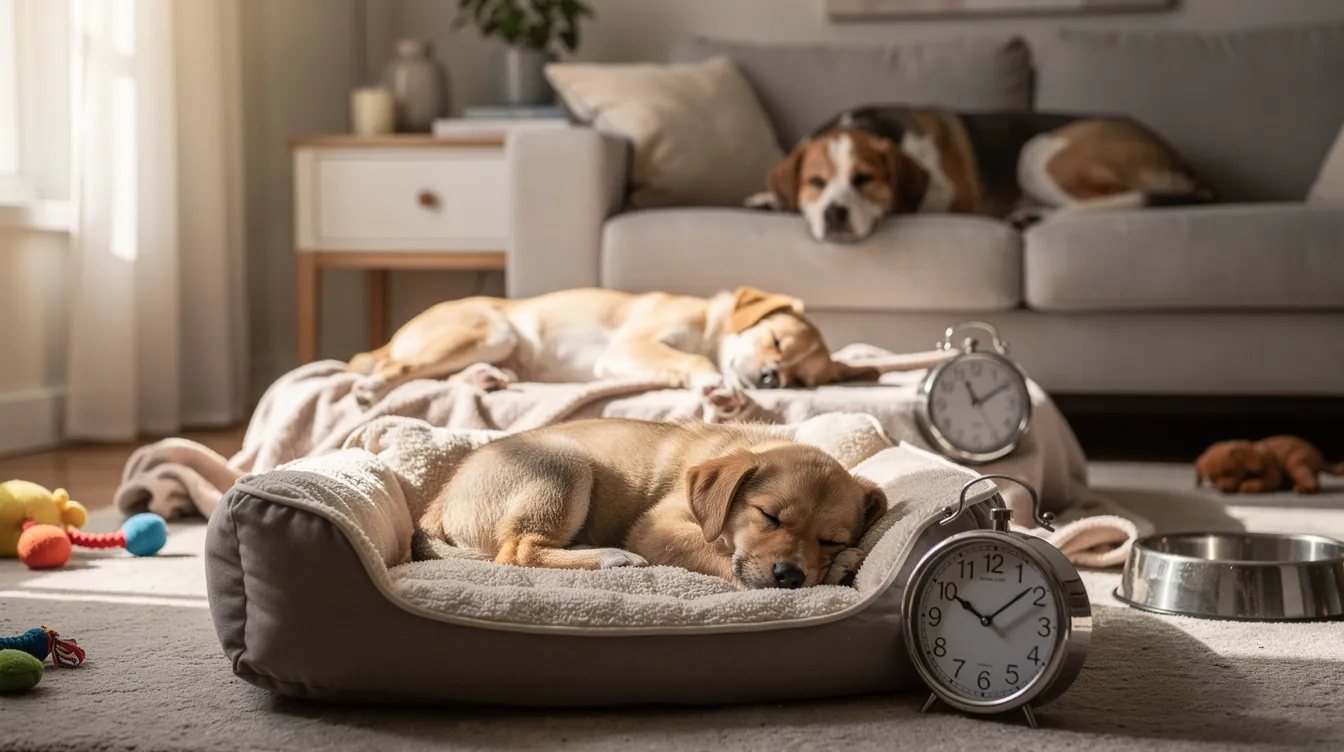
Puppies aged 8 to 12 weeks need 18-20 hours of sleep, leaving only 4 to 6 hours of total wakefulness each day. Those awake hours are broken into very short windows-typically 30 to 45 minutes at most before the puppy needs to fall asleep again.
During this phase, puppies typically sleep 8 to 10 hours at night, though nighttime sleep is irregular. Your pup may manage a 4-6 hour stretch before needing a potty break, followed by shorter blocks. The remaining 10-12 hours of sleep come through frequent daytime naps-expect around 5 naps spaced throughout the day. Puppies should have several two-hour naps during the day to reach their sleep targets.
This is the critical socialization window, and it’s tempting to pack in experiences. But respecting nap time during this phase actually enhances socialization outcomes. A well-rested puppy processes new experiences more effectively, forms positive associations more readily, and handles the stress of novel environments with greater resilience. Use those short wake windows strategically: brief play, a short potty break, a small training moment, then back to rest.
3-4 Months: Transitional Sleep Period
Between 12 and 16 weeks, total daily sleep gradually decreases to approximately 12-16 hours. Wake windows lengthen to 1-2 hours, and your puppy can maintain focus for longer periods-making this the ideal time to begin more structured training sessions of 5-10 minutes.
Night sleep becomes increasingly consolidated during this phase. Puppies aged 7-16 weeks can sleep 6-8 hours straight, and many puppies begin sleeping through the night without needing a bathroom break by around 4-5 months. Daytime naps reduce to 3-4 per day but remain essential.
A notable finding from owner surveys of approximately 2,300 puppies at 16 weeks reported a median daytime sleep of about 3.5 hours, with total 24-hour sleep closer to 11-12 hours in that age group. This suggests that conventional “18-20 hours” figures may include rest periods that aren’t full sleep, or that puppies at the upper end of this range naturally need less. Either way, individual variation is normal-focus on your puppy’s behavior and energy levels rather than hitting an exact number.
5-6 Months: Approaching Adult Patterns
By 5-6 months, most puppies sleep approximately 10-14 hours per day. Puppies aged 6 to 12 months need around 14 to 16 hours of sleep each day, with the majority occurring at night. Daytime naps drop to 1-2 sessions, and your pup can stay awake for 2-3 hours or more between rest periods.
This stage marks increasing readiness for advanced training. Your puppy’s ability to handle longer sessions, more complex commands, and early distraction proofing improves substantially-but only if healthy sleep habits remain consistent. Off-leash training and impulse control exercises depend heavily on focus and self-regulation, both of which erode rapidly in a sleep-deprived puppy. If you’re considering advanced obedience work, maintaining proper sleep is non-negotiable.
Giant breed puppies require more sleep due to rapid skeletal growth, and high-energy working breeds may require structured downtime to prevent overtiredness even at this age. Knowing your breed’s tendencies helps calibrate expectations.
Creating the Optimal Sleep Environment and Schedule
Knowing how much sleep your puppy needs is only half the equation. The quality of that sleep-where it happens, how consistently, and under what conditions-determines whether your pup actually gets the restorative rest that supports training goals and behavioral health. Research from a recent AAHA review found that sleep disturbance and quality correlated more strongly with problem behaviors than absolute hours of sleep.
Sleep Environment Setup
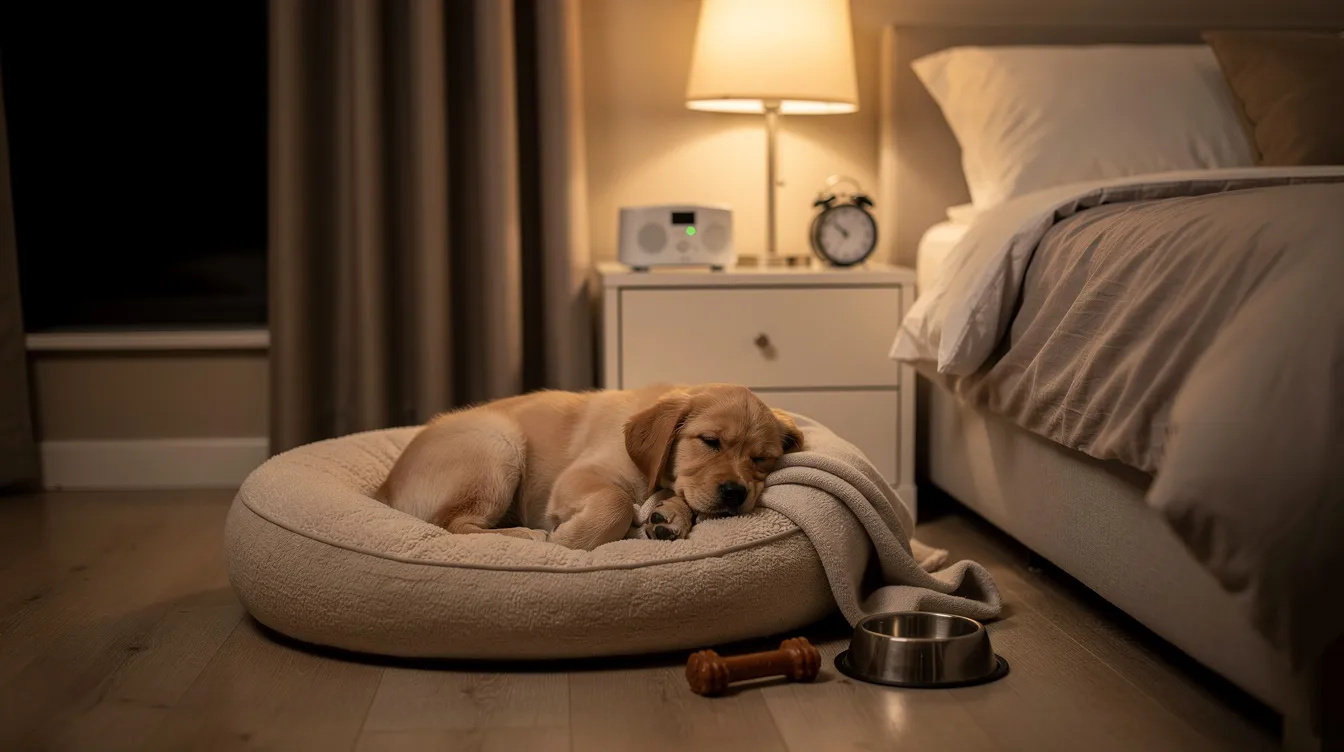
Create a quiet, dim sleep area for your puppy that signals “rest” consistently. Here’s how to optimize the space:
- Choose a quiet, consistent location away from household activity. A quiet place with minimal foot traffic, away from where people watch TV or gather, reduces arousal and helps your puppy settle faster.
- Provide an appropriately sized crate or dog bed. For crate training, the crate should be large enough for your puppy to stand and turn but not so large that they use one end as a bathroom. Use dividers and adjust as your puppy grows.
- Control lighting with blackout shades or a light crate cover for daytime naps. This mimics den conditions and helps regulate your puppy’s circadian rhythm, especially during Northern Virginia’s long summer days.
- Maintain a comfortable temperature between 68-72°F. Virginia’s humid summers and cold winters can disrupt sleep; keep the sleep area away from direct sun, drafts, and heating vents.
- Remove stimulating toys and distractions from the sleep area. Reserve the crate or bed exclusively for rest-this creates a strong association between the space and calm.
Establish a bedtime routine to signal sleep time. A predictable routine-last potty break, brief cuddle, into the crate with a consistent cue word-teaches your puppy that bedtime means bedtime. Limit food and water intake before bedtime to reduce the likelihood of overnight bathroom breaks.
Daily Schedule Framework
The recommended daily routine for puppies includes regular nap times built around age-appropriate wake windows. Structure your daily routine so that active periods (play, training, meals) alternate with scheduled rest periods.
For each age group, plan training at the start of wake windows when your puppy is sharpest. Playtime and socialization in the middle. Wind-down and quiet time at the end, leading naturally into the next nap.
Sleep Schedule Comparison by Age
| Time Period | 8-12 Weeks | 3-4 Months | 5-6 Months |
|---|---|---|---|
| Night Sleep | 8-10 hrs (1-2 potty breaks) | 10-11 hrs (0-1 potty break) | 11-12 hrs (uninterrupted) |
| Morning Nap | 2 hrs | 1.5 hrs | 1 hr |
| Midday Nap | 2 hrs | 1.5 hrs | Optional (1 hr) |
| Afternoon Nap | 2 hrs | 1-1.5 hrs | 1 hr |
| Evening Nap | 1-2 hrs | Optional (30-60 min) | None |
| Total Sleep | 18-20 hrs | 14-16 hrs | 11-14 hrs |
| Total Awake | 4-6 hrs | 8-10 hrs | 10-13 hrs |
Use this table as a starting point, then adjust based on your individual puppy’s cues. If your pup is showing signs of being overtired-hyperactivity, excessive mouthing, inability to settle-they likely need more rest than you’re currently providing.
Even with a perfect setup and schedule, sleep problems can and do occur. Knowing how to handle them prevents small disruptions from becoming entrenched behavioral patterns.
Common Sleep Challenges and Solutions
Sleep issues are among the most frequent concerns many owners raise, and unresolved sleep problems can directly interfere with training progress. Puppies that aren’t sleeping well often show up to training sessions unable to focus, overly reactive, or displaying attention-seeking behaviors that mask the underlying issue: they’re simply exhausted.
Nighttime Crying and Restlessness
Nighttime crying is totally normal during the first weeks in a new home. Your puppy has just been separated from their litter, placed in an unfamiliar environment, and asked to sleep alone-often for the first time. Root causes include separation anxiety, bladder discomfort, and environmental unfamiliarity.
Solution: Start with the crate near your bed so your puppy can hear and smell you. Include a comfort item-a blanket from the breeder or a soft toy. Maintain a consistent bedtime routine. When your puppy does need a potty break at night, keep it brief and boring: lights low, no play, no conversation. Take them out, let them do their business, and return them to the crate. This avoids reinforcing wakefulness with attention or excitement. Gradually move the crate to its permanent location over 1-2 weeks. Puppies may need potty breaks during the night for the first several weeks, but most puppies can sleep through by 4-5 months.
This process also builds independence-a skill that directly supports future off-leash reliability and confidence.
Difficulty Settling for Naps
If your puppy has trouble settling for nap time, the most common culprit is overstimulation or a missing wind-down period. Signs of an overtired puppy include frantic energy, excessive biting, “zoomies” that don’t stop, and an inability to lie still even when clearly exhausted.
Solution: Build a 5-10 minute wind-down period before each scheduled nap. Reduce stimulation gradually-stop active play, move to a calm area, offer a brief chew or quiet interaction. Then place your puppy in their crate or sleep area with a calm cue. Consistency is critical: the same sequence, same location, same cue word every time. Within days, most puppies begin to recognize the pattern and settle more quickly. Avoid engaging with whining after placement-waiting it out (provided physical needs are met) teaches your puppy that the crate means rest.
An overtired puppy cannot learn effectively. If you’re working through a structured training program, protecting nap times is just as important as the training sessions themselves.
Sleeping Too Much or Too Little
Behavioral regulation is influenced by adequate sleep in puppies, so deviations in either direction deserve attention. Rest contributes to overall health and immune system strength in puppies, and changes in sleep patterns can signal underlying issues.
Normal variation exists. Giant breed puppies sleep more than small breeds. Individual temperaments differ. Growth spurts can temporarily increase sleep needs. If your puppy is eating well, alert when awake, and progressing normally in training, minor variations from the guidelines above are fine.
Red flags to watch for: If an 8-week puppy is sleeping fewer than 15 hours total, or if excessive sleep is accompanied by lethargy, decreased appetite, social withdrawal, or other symptoms of illness, schedule a vet visit. Sleep that is severely fragmented-frequent abrupt awakenings, restlessness, refusal to lie down-may indicate pain, infection, or other health issues that need diagnosis.
Implementing these strategies creates the foundation for training success: a well-rested puppy is a trainable puppy.
Conclusion and Next Steps
Proper puppy sleep isn’t a luxury-it’s the biological foundation for everything you want your dog to become. Puppies sleep 18 to 20 hours per day in their earliest weeks, gradually decreasing to 11-14 hours by 6 months of age. Every hour of quality sleep directly supports physical development, brain development, immune system function, and the behavioral stability that makes training possible.
Here are your immediate next steps:
- Assess your current setup. Is your puppy’s sleep environment quiet, dark, and temperature-controlled? Is their crate or dog bed appropriately sized?
- Implement the age-appropriate schedule from the table above, adjusting wake windows and nap frequency to match your puppy’s current age.
- Monitor for two weeks. Track approximate sleep hours, note behavioral changes, and adjust as needed. You should see improvements in focus, reduced mouthing, and calmer settle behavior.
- Align training with sleep. Schedule practice sessions at the start of wake windows when your pup is most alert and receptive.
If your puppy’s sleep habits aren’t improving despite consistent environmental and schedule adjustments, or if behavioral issues like reactivity, aggression, or extreme difficulty settling persist, it may be time for professional guidance. Schedule a free phone consultation with Off Leash K9 Training of Sterling for a personalized puppy development plan that integrates sleep optimization with structured obedience training.
Frequently Asked Questions
Can my puppy sleep too much?
In most cases, a puppy sleeping a lot is totally normal-especially during the first 16 weeks and during growth spurts. Puppies process enormous amounts of new information daily, and sleep is how their brain and body recover. However, if excessive sleep is paired with lethargy when awake, poor appetite, weight loss, or disinterest in play and interaction, consult your vet. The concern isn’t the sleep itself but the accompanying symptoms that may indicate illness or pain.
Should I wake my puppy for scheduled activities?
Generally, no. It’s better to plan your daily routine around your puppy’s natural wake windows rather than interrupting deep sleep. Waking a puppy from a deep nap disrupts the restorative sleep cycles-including growth hormone release and memory consolidation-that support healthy development. If you need to maintain a schedule for house training or meals, aim to time those activities around when your puppy naturally wakes rather than setting an alarm to pull them out of rest.
How does sleep affect my puppy’s ability to learn commands?
Significantly. Sleep deprivation erodes impulse control, focus, and memory retention-the three capabilities your puppy needs most during training. Research shows that sleep after learning improves retention of new skills, meaning a nap after a training session may be just as valuable as the session itself. If your puppy seems unable to focus, is excessively mouthy during lessons, or can’t seem to remember yesterday’s progress, sleep deprivation may be the underlying cause rather than stubbornness or low intelligence.
When should I contact a professional trainer about sleep-related behavioral issues?
Contact a professional if your puppy’s sleep-related behaviors aren’t improving by 4-5 months despite consistent routines, if nighttime restlessness is accompanied by aggression or extreme anxiety, or if your puppy’s overtired behaviors-biting, reactivity, inability to settle-are escalating rather than improving. These patterns often indicate that sleep issues and training gaps are compounding each other, and professional assessment can identify whether the root cause is environmental, behavioral, or medical.
Will crate training help my puppy sleep better?
Yes. A properly introduced crate provides the den-like environment that promotes better rest and helps your puppy feel secure. Crate training teaches your puppy to self-settle, establishes clear boundaries between active time and nap time, and prevents the overstimulation that comes from having free access to the entire house. Beyond sleep benefits, crate training builds the independence and self-regulation skills that are essential for advanced obedience and eventual off-leash reliability. Starting early with positive crate associations pays dividends across every area of your puppy’s development.
from Off Leash K9 Training of Sterling https://ift.tt/v0PDaBx
via IFTTT


Comments
Post a Comment