Dog Jumping on Guests: How Sterling Owners Can Build Better Manners
Key Takeaways
- Most dogs jump on guests out of excitement, attention seeking, or unclear household rules, not dominance.
- Yelling, pushing, or grabbing your dog’s collar can accidentally reward jumping with attention or make your dog more excited.
- Teaching sit, down, stay, place, command, recall, and leash control gives your dog a clear alternative behavior to jumping on people.
- Every person in the house must follow the same greeting rules, or your dog will keep practicing the behavior problem.
- Consistent daily practice and, when needed, working with an experienced dog trainer can help reduce jumping and build safer, more reliable greeting habits.
Introduction
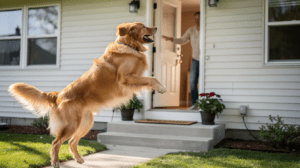
If you live in Sterling, VA and are looking for dog training in Sterling, VA, you have probably watched this scene unfold: the doorbell rings, and your dog launches toward the door, paws flying, ready to greet whoever walks in. Dog jumping on people is one of the most common complaints among pet owners, and it is easy to see why it causes stress.
While it may look cute when a young puppy bounces up to say hello, a 60-pound adult dog doing the same thing can knock over children, elderly family members, or strangers carrying packages. Jumping is not just embarrassing; it can be dangerous.
This article breaks down why dogs jump on guests and how structure, calm greetings, and clear obedience can help you reduce jumping and build better greeting habits. Even long-term jumping habits can change with a practical, step-by-step plan.
Why Dogs Jump on People
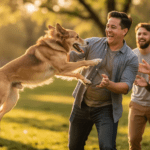
Jumping behavior is normal dog behavior. Many social dogs jump because they want to get closer to a person’s face, hands, and attention during greetings. The problem is that this greeting behavior gets accidentally reinforced every time it works.
Excitement and greetings. Dogs jump to get closer during exciting moments such as greetings. When your dog sees a guest walk through the door, jumping may feel like the fastest way to get closer to the person’s face, hands, and attention. For many dogs, jumping works because it quickly creates eye contact, touch, talking, or movement from the person.
Attention seeking. Many dogs learn that putting paws on a person brings eye contact, touch, and reaction. Even when most people say “no” or “off,” they still talk to the dog, make eye contact, and engage physically. That response feels like a reward.
Lack of impulse control. Young puppies and adolescent dogs simply have not had enough practice pausing their excitement. Without structured opportunities to learn calm behavior, a pup defaults to whatever feels fun and rewarding in the moment.
Inconsistent rules. Inconsistent rules about jumping can reinforce unwanted behavior in dogs. When one family member allows jumping, and another does not, the dog never learns a single reliable rule for greeting people.
In rare cases, jumping can reflect anxiety or pushy behavior that may need a more tailored behavior plan with professional guidance.
How Structure Helps Stop Dog Jumping on People
Structure means establishing consistent rules, routines, and calm patterns for how your dog greets people at the door. It is an important step that sets the foundation before any obedience cue is useful in real life.
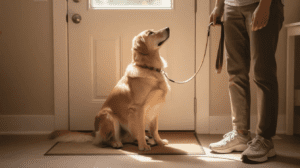
Start by deciding in advance where the dog goes when the doorbell rings. Options include a place cot, a crate, a baby gate, or keeping the dog on leash next to the handler. When the dog starts hearing the doorbell, they should already know the routine. This prevents them from rehearsing jumping on guests while you figure out a plan in the moment.
Here is what does not work:
- Pushing the dog away (gives physical contact and energy)
- Yelling or saying “down” repeatedly (gives dog attention)
- Kneeing the dog in the chest (increases arousal and can cause injury)
When it is safe to do so, ignoring a jumping dog helps teach them that jumping does not lead to attention. Give calm attention only when the dog has all four paws on the ground. For large, intense, or unsafe jumpers, use a leash, baby gate, crate, or place command so you can prevent jumping while still rewarding calm behavior.
Managing excitement levels through exercise can help some dogs settle before guests arrive. A short walk, structured play, or a few minutes of obedience practice can take the edge off, but the dog still needs clear greeting rules. Every adult, child, and frequent visitor in the house should follow the same protocol. Preventing a dog from jumping requires consistency and teaching calm behavior across every interaction.
Obedience Skills That Build Better Guest Manners
Reliable dog obedience training makes it far easier to stop dogs from jumping because you can tell the dog exactly what to do instead. Dogs learn best by being told what to do rather than what not to do, so focus on building a strong repertoire of commands that replace jumping with a specific position.
Core skills for visitor manners:
| Skill | How It Helps |
| Sit | An incompatible behavior with jumping. A dog cannot sit and jump at the same time. Training a dog to sit can help prevent jumping during greetings. |
| Down | Anchors the dog to the floor and lowers arousal. |
| Stay | Holds the dog in position while guests enter the room. |
| Place command | Sends the dog to a designated bed or cot. The dog learns to wait there until released. |
| Recall | Allows you to call the dog away from the door or a guest. |
| Leash control | Keeps the dog managed at the door so the handler can guide rather than grab. Helpful for dogs that also pull on leash. |
Dogs can learn to sit when greeting people, and rewarding desired behaviors helps dogs learn what to do instead. A clicker can be a helpful marker during training because it tells the dog exactly which calm behavior earned the reward. Click and treat when your dog has all four paws on the ground so the dog connects calm standing or sitting with good things.
Practice impulse control with short repetitions: open the door slightly, cue sit or stay, close it if the dog breaks position, and repeat. Gradually add controlled distractions like doorbell sounds, family movement, and planned visitors so these skills work beyond a quiet living room
How to Practice Calm Greetings With Guests
Before testing your training with real visitors, practice the routine without guests. Then invite one cooperative friend who understands the rules. Build up to more complicated situations only after success in controlled settings.
A simple door routine:
- Dog on leash or sent to a place before the knock.
- Handler cues sit or place and waits for calm paws on the ground.
- Open the door only when the dog is in a holding position.
- If the dog jumps, the guest steps back or turns away.
- Handler calmly resets the dog to sit, down, or place.
- Try again. Reward polite greetings with treats consistently during training.
Guests should be instructed to ignore a dog until it is calm after entering the home. If a dog continues to jump, the greeting simply ends. No petting, no eye contact, no reaction. Reward calm behavior immediately after the dog stops jumping with quiet praise, small food rewards, or calm petting if the dog can stay settled.
Practice greeting exercises in short, consistent sessions. Some dogs improve within a few weeks, while dogs with a long history of jumping may need several months of steady practice. Patience matters because new greeting habits take repetition. Using management tools like baby gates can help prevent jumping during greetings while you build skill. A baby gate or a separate room can keep the dog safe and contained when you cannot actively supervise.
Try scattering treats on the ground when a guest enters to redirect your dog’s focus downward. This teaches your furry friend that good things happen at floor level, not at chest height.
Gradually increase difficulty: longer doorbell rings, more people entering, someone carrying packages, or a friend arriving after dark. Keep sessions short and successful so the dog builds confidence.
Final Thoughts
A dog jumping on people can change when you pair structure, calm greetings, and consistent obedience practice. The goal is to teach your dog that keeping four paws on the floor is the fastest way to earn attention, treats, and affection from every person who walks through your door.
Yelling, pushing, or wrestling with the dog usually does not solve jumping and can keep the behavior problem alive.Pick one or two changes to start this week. Teach your dog the place command at the door or use a leash for guest practice. Small, consistent steps add up quickly.
If your dog’s jumping is intense, knocks people down, includes nipping, or feels unsafe around children or older adults, professional training can help. To get help with dog obedience, impulse control, and calm visitor manners, contact a trainer for a free consultation.
FAQ
How long does it usually take to stop a dog from jumping on guests?
Many families see improvement in a few weeks if they practice short sessions daily and keep rules consistent with every guest. For an adult dog with deeply practiced habits, fully replacing jumping with polite greetings may take 2 to 3 months of steady structure and rehearsal. Progress is faster when owners manage the environment so the dog rarely gets to practice jumping during real visits.
Should I crate my dog when guests arrive if the jumping is very intense?
Crating or using a baby gate can be a smart short-term safety tool while you work on obedience and calm greetings. The goal is not to hide the dog forever but to bring your pet out on leash for structured practice once everyone is seated and the energy level is lower. Pair the crate with chews or stuffed food toys so it feels like a secure, positive place rather than punishment.
What should I tell guests who insist they “don’t mind” my dog jumping?
Try a simple script: “We are working on his manners, so please ignore him if he jumps and only pet him when all four paws are on the floor.” Even well-meaning visitors can undo training by rewarding jumping, so clear, polite boundaries help everyone stay on the same page. Consider putting a small reminder sign near the door for frequent visitors.
Is my dog being dominant when he jumps on people?
Most dogs jump because they are excited or seeking attention, not because they are trying to be dominant. Focusing on calm structure, impulse control, and clear obedience cues is far more effective than worrying about dominance labels. If jumping is paired with growling, stiff posture, or guarding behavior, a professional behavior consultation is a good idea.
Can older dogs learn to stop jumping, or is it too late?
Senior and adult dogs can absolutely learn new greeting habits, although it may take longer to replace years of practice. Use shorter training sessions and lower-impact exercises, focusing on calm sits, downs, and place rather than high-energy drills. Be patient, stay consistent, and seek professional help if mobility issues or frustration make practice difficult.
from Off Leash K9 Training of Sterling https://ift.tt/ZjekTwF
via IFTTT


Comments
Post a Comment